WHAT’S THE FUNCTION OF THESE BUILDINGS?
Quiz
Guess the function of these iconic buildings in Budapest!
When newcomers stroll the city for the first time, they come across grand buildings and just wonder what their function is.
Test your imagination and do our quiz of five questions. Later in the blog you can read about the story of these buildings.
Would you like to know the story behind the buildings?
Keleti Railway Station
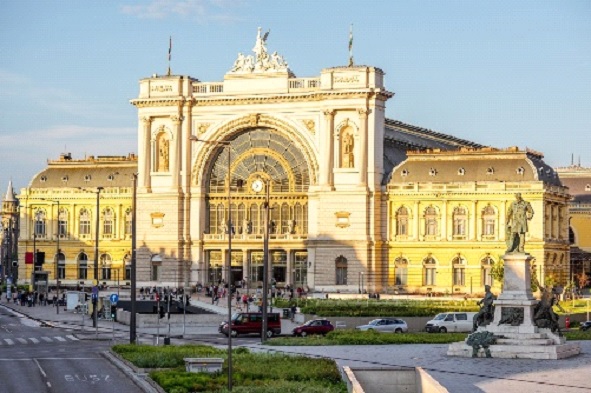
This is one of the two historic railway stations in Budapest, called Keleti Pályaudvar (Eastern Station). The building was designed in eclectic style by Gyula Rochlitz and was handed over to the public in 1884. The statues of George Stephenson, the creator of the first steam locomotive, and James Watt, who perfected the steam engine, overlook the square named after Gábor Baross, the popular iron minister whose merits were invaluable in building the Hungarian railway system.
Central Market
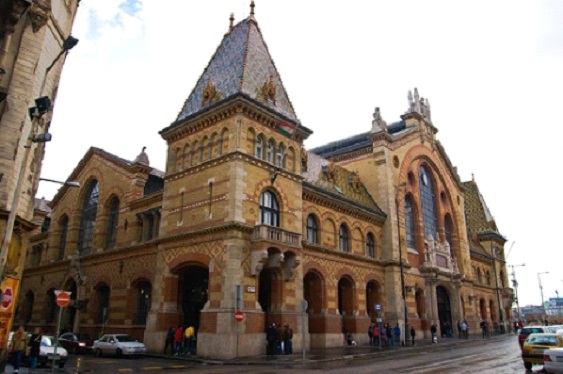
The Great Market Hall or Central Market Hall, in Hungarian “Nagyvásárcsarnok,” is the largest and oldest indoor market out of the six similar market halls in Budapest, dating back to 1897.
The market offers a large variety of stalls on three floors. The entrance gate has a neogothic touch. A distinctive architectural feature is the roof, which was restored to have colorful Zsolnay tiling from Pécs. The size of the building is 10,000 square meters, and its frame is a steel structure.
The market offers a large variety of stalls on three floors. The entrance gate has a neogothic touch. A distinctive architectural feature is the roof, which was restored to have colorful Zsolnay tiling from Pécs. The size of the building is 10,000 square meters, and its frame is a steel structure.
Ice Skating rink
The City Park Ice Rink, in Hungarian Városligeti Műjégpálya, is a public ice skating rink, located next to the Heroes’ Square. Opened in 1870, it is the largest and one of the oldest skating rinks in Europe. During summer, the area is filled up with water to create a pond, which is primarily used for boating. The City Park Ice Rink began to receive the first masses of skaters on 29 January 1870, when Crown-Prince Rudolph ceremonially inaugurated it.
The first “skating pavilion” was a small two-room wooden booth erected on the lakeshore, but unfortunately, it was destroyed in a fire in 1874. The new building was based on the plans of architect Ödön Lechner, the father of Hungarian Art Nouveau. Hence the style that gives a feeling of Asian architecture.
The first “skating pavilion” was a small two-room wooden booth erected on the lakeshore, but unfortunately, it was destroyed in a fire in 1874. The new building was based on the plans of architect Ödön Lechner, the father of Hungarian Art Nouveau. Hence the style that gives a feeling of Asian architecture.
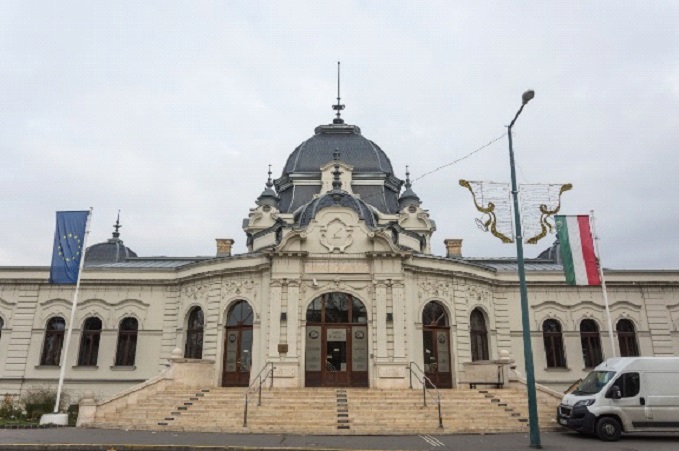
Elephant House
This gem of architecture, built in 1912, is the Elephant House in Europe’s oldest Zoo in the City Park (Városliget). This amazing Art Nouveau work of Kornél Neuschloss exhibits the Moorish influence of the fin de siécle. Zsolnay ceramics cover the dome.
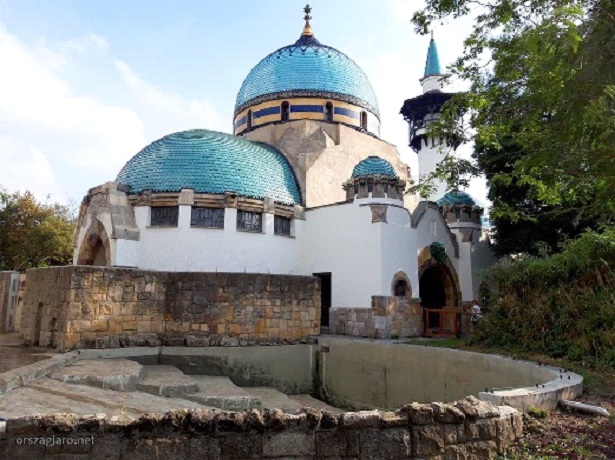
Dob u. 85. Primary School
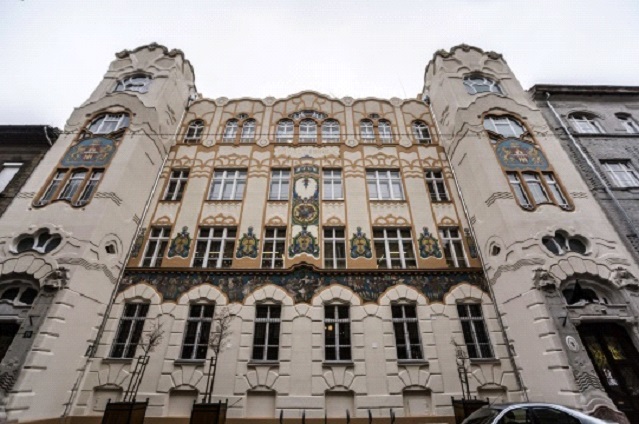
This wonderful Art Nouveau building designed by Ármin Hegedűs was inaugurated in 1906. It was built as part of a municipal program of building modern schools. The decoration is typical of Hungarian Art Nouveau, incorporating ancient Hungarian folk art motives. As in many other Art Nouveau buildings, the interior is covered by Zsolnay ceramics. It’s located in the 7th District, within walking distance of the Grand Boulevard (Nagykörút).