The story of the hungarian cards
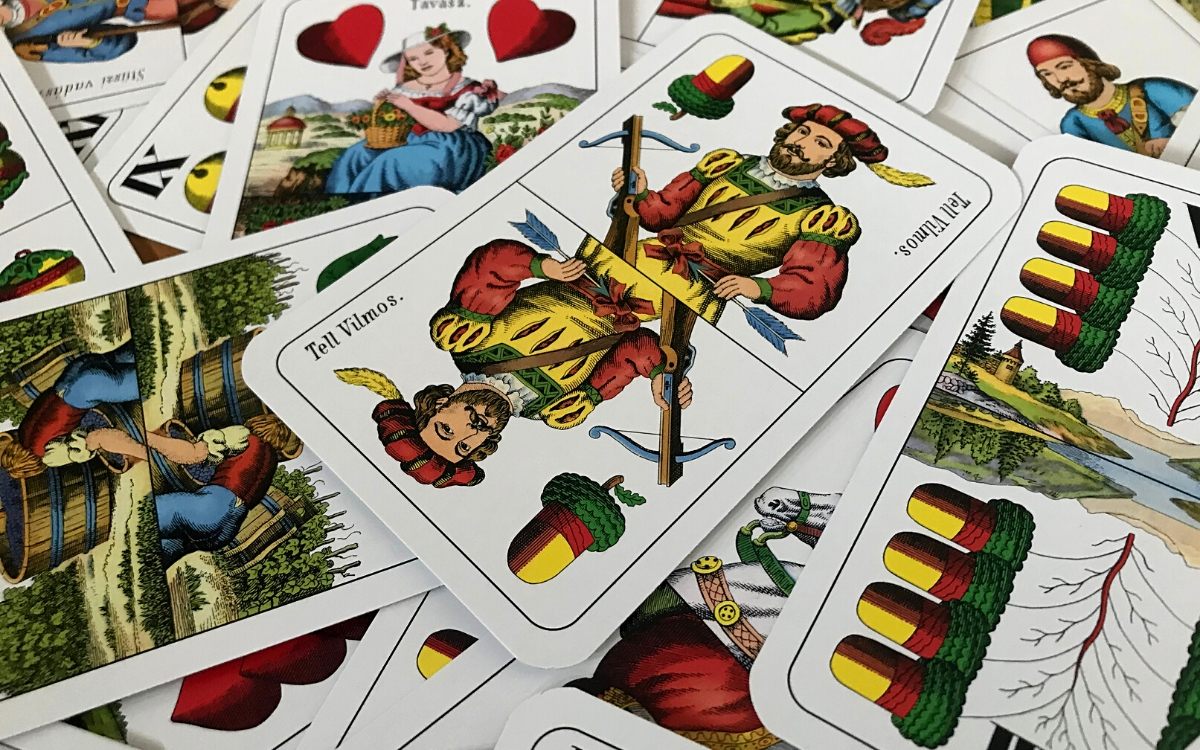
MAGYAR KÁRTYA also called Tell-cards can be an ideal gift for both kids and adults. But how did they become part of the Hungarian freedom struggle against the Austrian Habsburgs?
This playing card deck was designed and first produced by József Schneider, a playing cards manufacturer in the 1830’s in Budapest. There is a plaque in Kazinczy utca (7th District) dedicated to him. The early decades of the 19th century were the time of national revival when the Hungarian language became fashionable leading to the instalment of Hungarian as the official language of the kingdom replacing Latin.
Originally, Schneider planned to have Hungarian historical figures, i.e. national heroes who symbolised the fight for freedom, but he realised it was too risky to pass the strict censorship rules the Habsburgs imposed on the country. He turned to choose from the Swiss freedom fighter heroes of Friedrich Schiller’s play, “Wilhelm Tell” (TELL VILMOS in Hungarian), written in 1804. The play also performed in Hungarian theatres in the 1830s and the 14th century anti-Austrian hero’s message to the Hungarian public was obvious, while the censors, insensitive to the political overtones, passed it.
The playing cards are still very popular in Hungary and with variation in some neighbouring countries. The most popular game is known as Snapszli, see the rules here:
http://www.pagat.com/marriage/schnaps.html
The paradox of the Tell cards story is that it is unknown to the Swiss, they seem to stick to their own German cards used mostly for playing Jass. Though similar, but less decorative than the Schneider cards depicting both Shiller’s heroes and allegorical figures of the four seasons.