
Statues of St. George
The cult of the 4th-century martyr, Saint George, thrives in many countries, especially England and Caucasian Georgia, but George (György) day is also very important in Hungarian and Eastern-European folklore. An iconic commemoration of this is the famous statue St George on his Horse Slaying the Dragon. The original statue dates back to the 14th century and can be seen in Prague but there are two replicas of it from later ages that you can find in Budapest and Cluj-Napoca (Kolozsvár).
The equestrian statue of Saint George slaying the dragon is now installed in Prague Castle. The bronze sculpture was created in 1373 by Hungarian sculptors Márton and György Kolozsvári, popularly known as the Kolozsvári Brothers, their name referring to their place of origin, the major city of Transylvania, now called Cluj-Napoca in Romanian. It was originally erected in Buda castle and brought to Prague later to protect it from the Turkish invaders.
The idea of making a replica of the statue and erecting it in the birthplace of the sculptors was raised during preparations for the Millennium year of 1896, the commemoration of the Magyar tribes conquering their new and final homeland. The project was supported by Emperor Franz Joseph who gave a clay replica of the original to the city of Budapest (it can still be seen at Budapest’s History Museum). In 1903, sculptor József Róna was commissioned to make a replica to be erected in Kolozsvár the following year. However, Róna, made two replicas – the second becoming part of the Fishermen’s Bastion collection of sculptures at the foot of the steps leading to the Matthias Church.
The photos of the original statue and its replicas are:
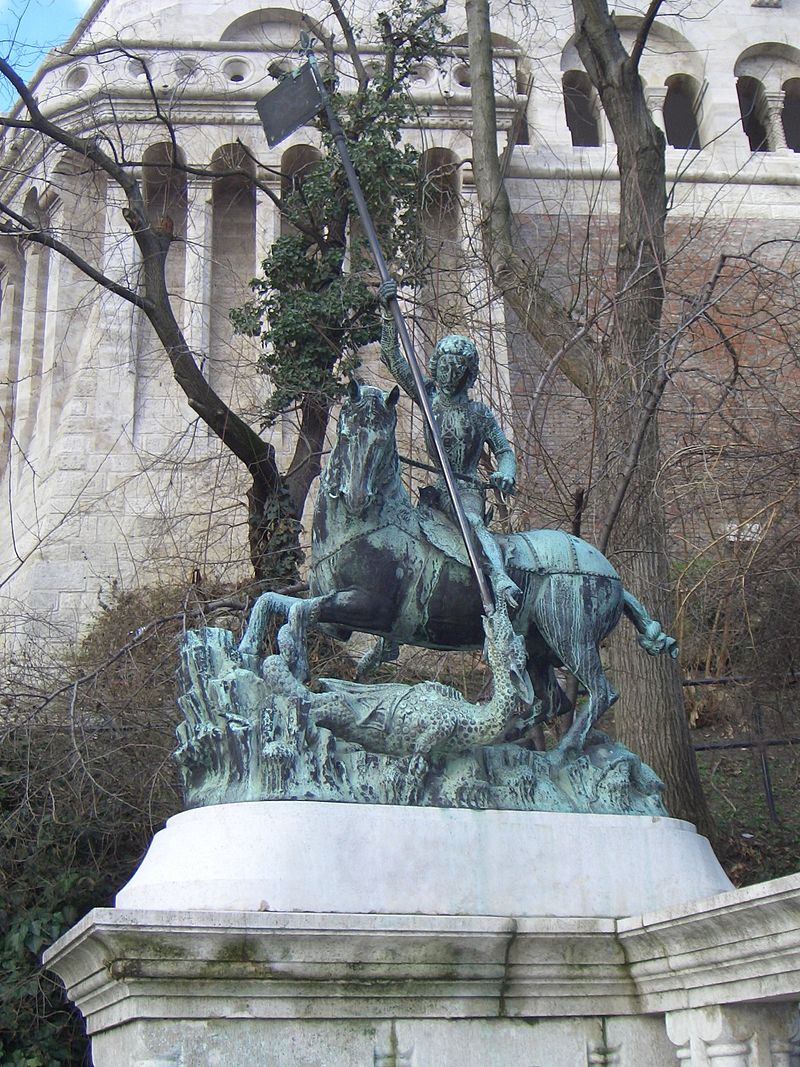
1. Budapest
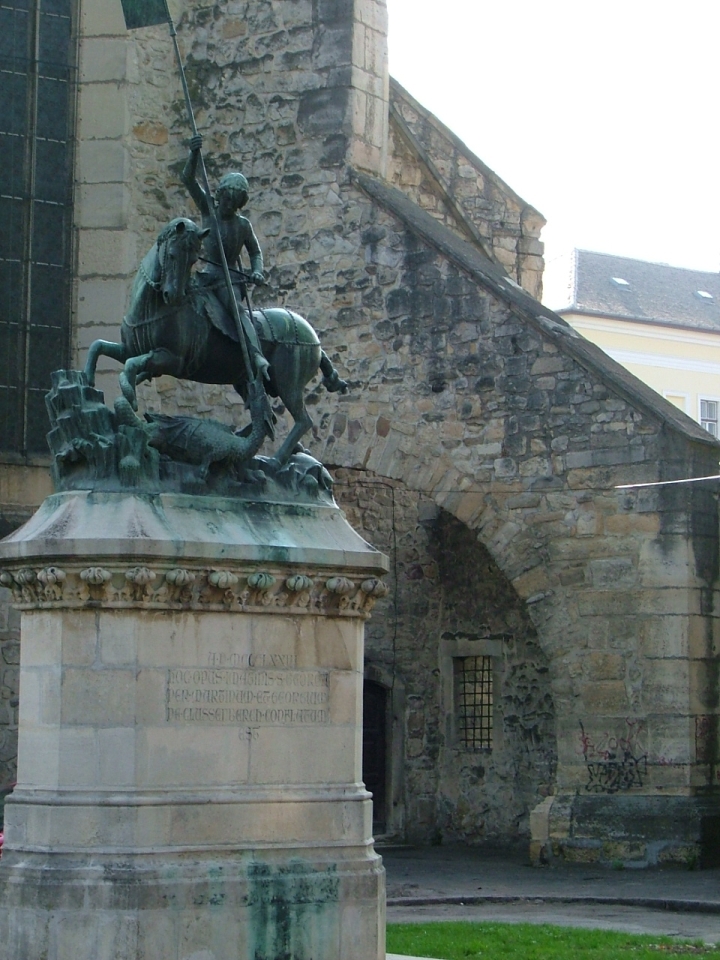
2. Kolozsvár (Cluj-Napoca)
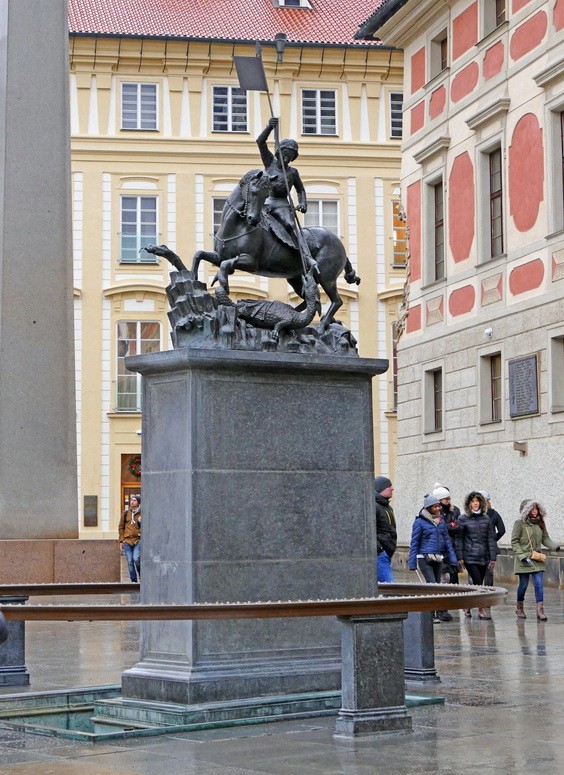
3. Prague